
NDAA Compliant Drones: A 2026 Compliance Guide for Drone Operators
Updated October 2026
NDAA compliant drones are drones whose airframe and critical components - flight controller, radios, data links, cameras, gimbals, and ground-control software - do not come from covered foreign entities under Section 848 of the FY2020 NDAA. Manufacturers self-declare compliance; Blue UAS and Green UAS add outside vetting on top.
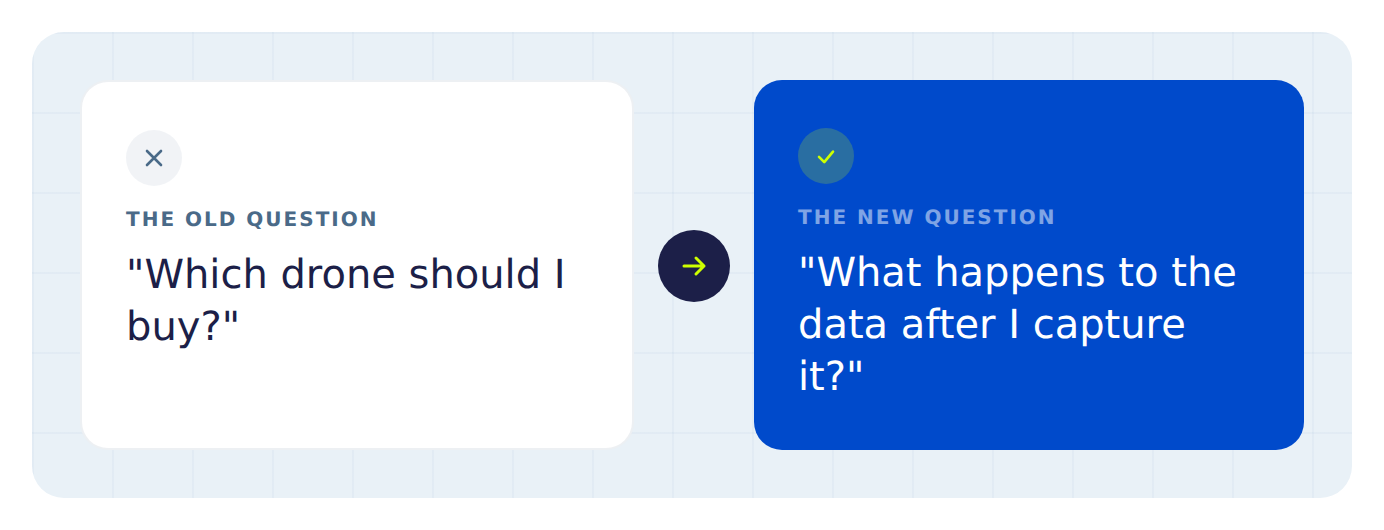
Something keeps happening on the utility side of the inspection table that most DSPs don't see.
An operator invests six figures in an NDAA-compliant fleet. Retrains the pilots. Updates every bid document. Wins the work. And then the utility flags 30% of the deliverables on the first campaign: not for compliance, but for image quality. Wrong angles. Coverage gaps on crossarms. Metadata that doesn't match spec. The new platform handles differently than the DJI rig the crew spent years dialing in, and nobody budgeted time to close that gap.
By the time the rework is done, the relationship is damaged. The follow-on contract goes to someone else.
We've watched this play out with enough programs now to know it's not bad luck. It's a structural problem with how the industry is approaching the DJI transition.
If you want the legal picture first - what the Covered List actually restricts, what stays flyable, and how utilities are rewriting procurement around it - start with our guide to the DJI ban and utility drone inspection, then come back for the output side.
Every compliance guide out there will tell you which drone to buy. Almost none cover what happens after you buy it - how the transition affects your actual output, and where operators are losing ground while thinking they're ahead.
That's what this guide covers, based on what we see daily processing inspection data and working between utilities and the DSPs who serve them.
What Changed in NDAA Drone Compliance - and How Fast It Moved
If you still think NDAA compliance is a federal procurement rule that doesn't touch your world, you're behind. A lot happened between December 2025 and now, and most operators we talk to haven't fully caught up.
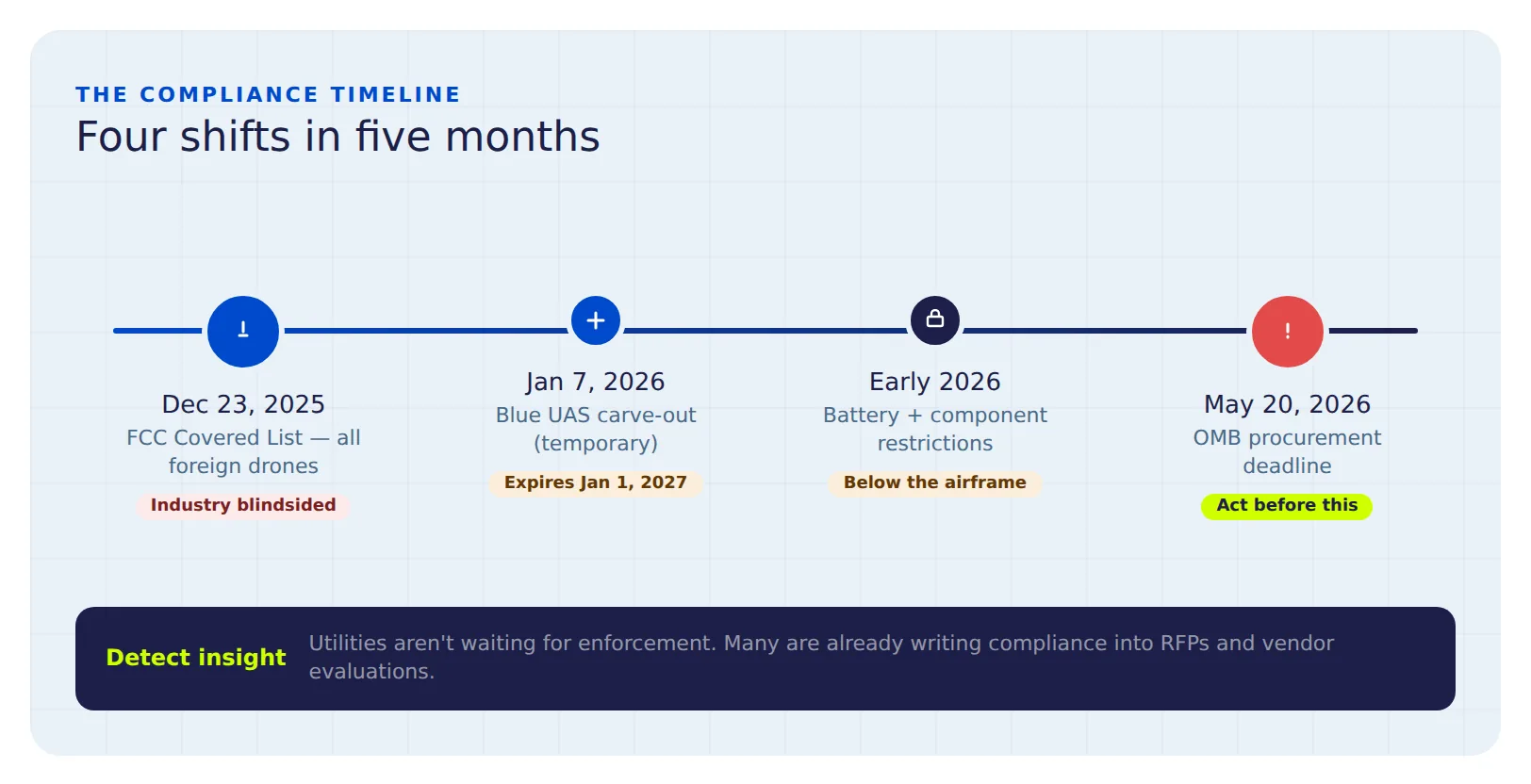
December 23, 2025: The Trigger
The FY2025 NDAA gave a national security agency a deadline to complete a formal security review of DJI. No agency completed it. The automatic consequence kicked in - but instead of adding just DJI to the FCC's Covered List, the FCC went dramatically broader, covering all foreign-manufactured drones and critical components. The commercial drone industry was blindsided.
January 7, 2026: The Carve-Out
The Department of Defense issued a temporary exemption for Blue UAS-listed platforms and drones qualifying as "domestic end products." The catch? It expires January 1, 2027, with no guarantee of renewal. Plan accordingly.
Early 2026: Below the Airframe
The FY2026 NDAA introduced phased restrictions on DoD procurement of batteries linked to foreign entities of concern. Compliance now reaches into your power systems, your component supply chain, and your data infrastructure. Domestic battery production at scale is still years away, meaning cost premiums are the near-term reality.
May 20, 2026: The OMB Deadline
Federal agencies had until this date to update their procurement policies to comply with the OMB's comprehensive UAS security memorandum. The agencies your utility clients work with - from transmission inspection programs to distribution network assessments - are tightening vendor requirements right now.
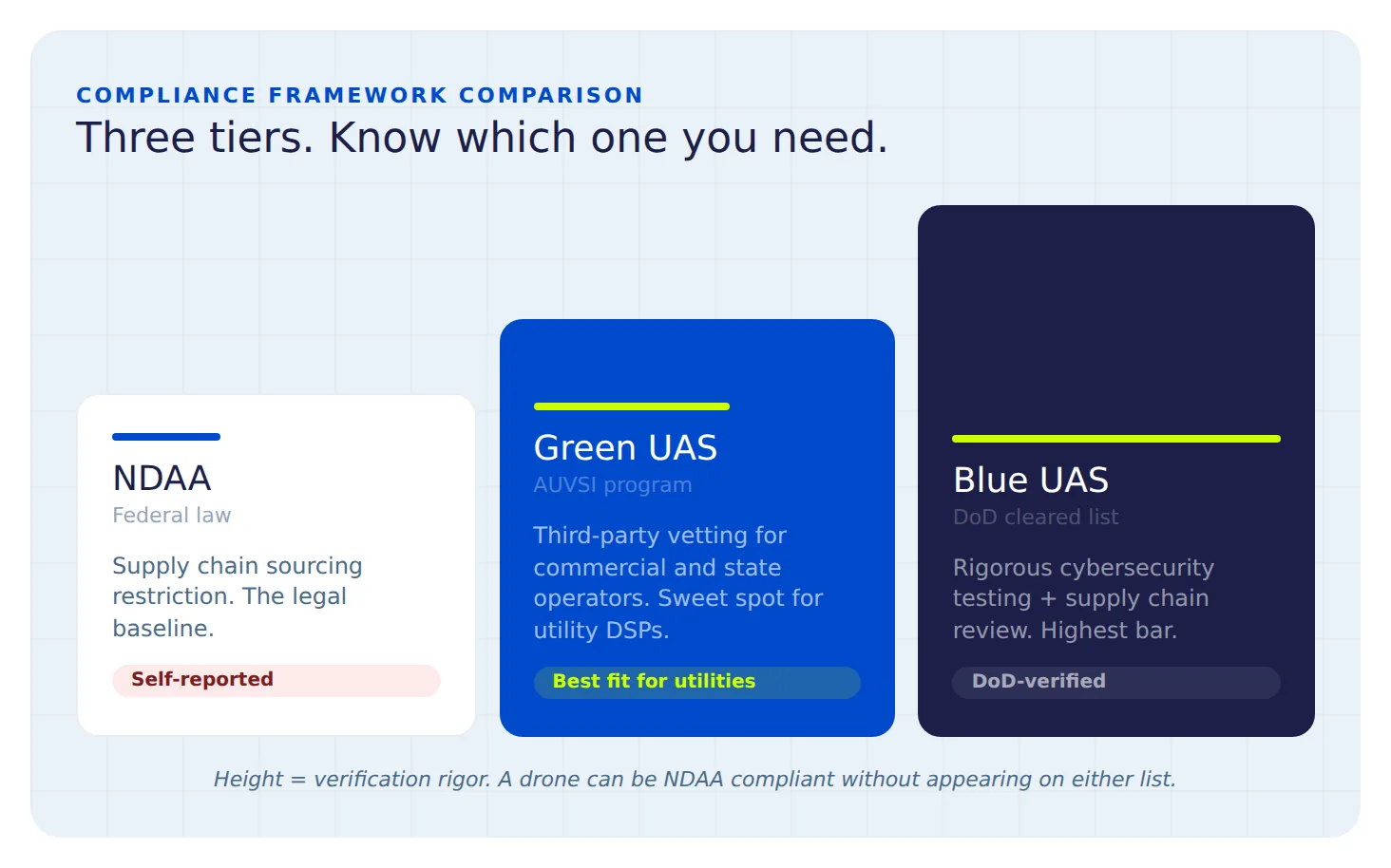
NDAA vs. Blue UAS vs. Green UAS: Cutting Through the Acronym
NDAA, Blue UAS, Green UAS - operators routinely conflate these terms, and the confusion costs real money. Some over-invest in certifications they don't need. Others under-invest in compliance they do. Here's the cheat sheet:
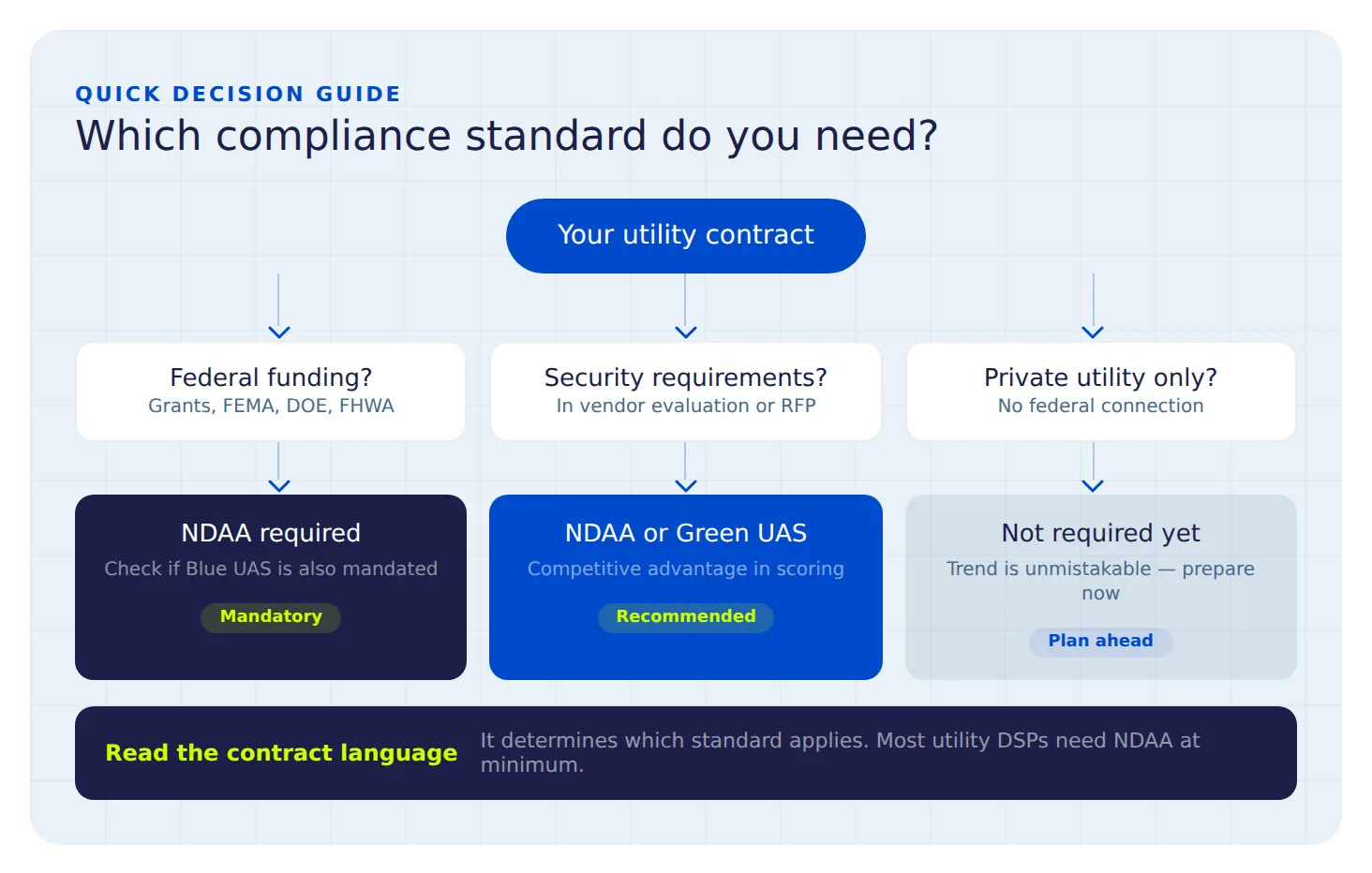
Quick Compliance Decision Guide
Federal funding in your contract chain? → NDAA compliance is mandatory. Check if Blue UAS is specifically required.
Utility client with security requirements? → NDAA or Green UAS certification puts you ahead of competitors in scoring.
Private utility, no federal connection? → Not legally required today - but the trend line is unmistakable.
A critical nuance most DSPs miss: NDAA compliance is self-reported. There is no official body that certifies it. Manufacturers provide their own sourcing declarations, and the verification burden falls on you. If your vendor can't produce detailed component documentation on request, treat that as a red flag.
Which drones are NDAA compliant?
There is no official list of NDAA compliant drones, because compliance is self-declared. The practical shortlist for utility work is the set of platforms that also hold Blue UAS or Green UAS status, which means someone other than the manufacturer has checked the sourcing claim. These are the compliant platforms tracked in Detect's 2026 industry report:
| Platform | Status | Starting price range | Notes |
|---|---|---|---|
| Skydio X10 / X10D | Blue UAS Cleared | $15K-$22K | AI autonomy, GPS-denied flight |
| Freefly Astro Prime | Green UAS Cleared | $25K-$35K | Modular open ecosystem |
| Inspired Flight IF800 Tomcat | Blue and Green UAS | $22K-$30K | Heavy-lift, customizable payloads |
| Parrot ANAFI USA GOV | Blue UAS Cleared | Varies | Primary non-U.S. Western option |
Source: Detect, State of Utility Drone Inspections 2026. Ranges reflect base configuration with standard payloads as of Q2 2026. Listings change - confirm a platform's current Blue UAS or Green UAS status before you buy.
A utility will ask for the paperwork behind the platform, not just its name. Expect to show component sourcing declarations, a Blue UAS or Green UAS listing where the contract requires one, documented data residency, ISNetworld safety prequalification, and cyber insurance - the compliance-documentation criterion in Detect's 2026 utility scorecard (State of Utility Drone Inspections 2026).
The DJI Fleet Transition: What Utility DSPs Are Hearing
We have to talk about DJI.
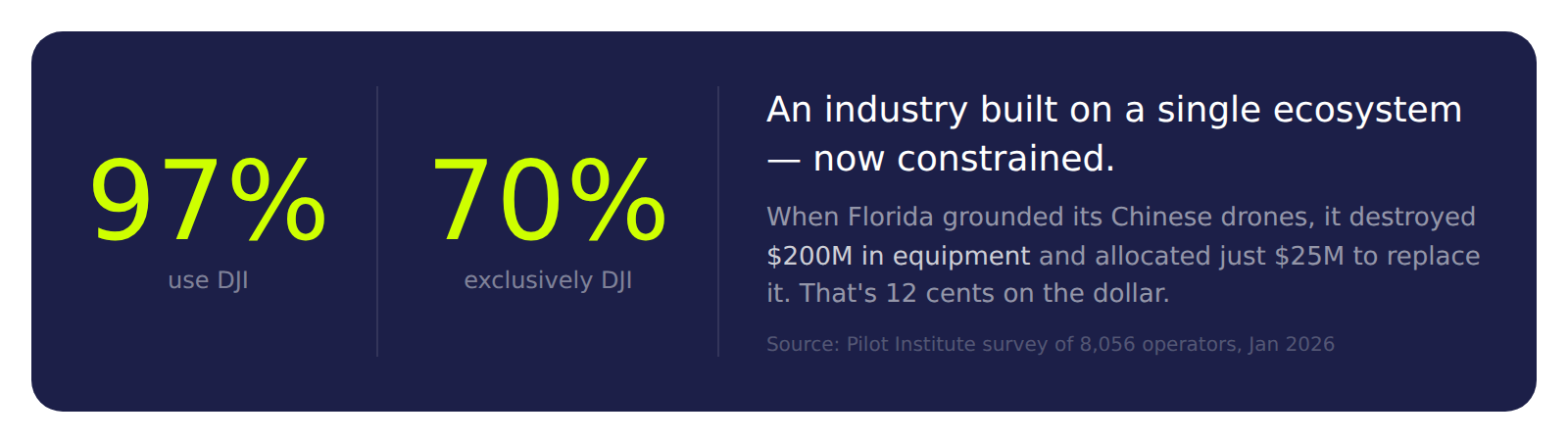
When Florida mandated that public safety agencies stop using Chinese-manufactured drones, the state grounded over $200 million in equipment - then allocated just $25 million to replace it. That's 12 cents on the dollar.
An industry built on one manufacturer's ecosystem. And now that ecosystem is constrained.
The current reality
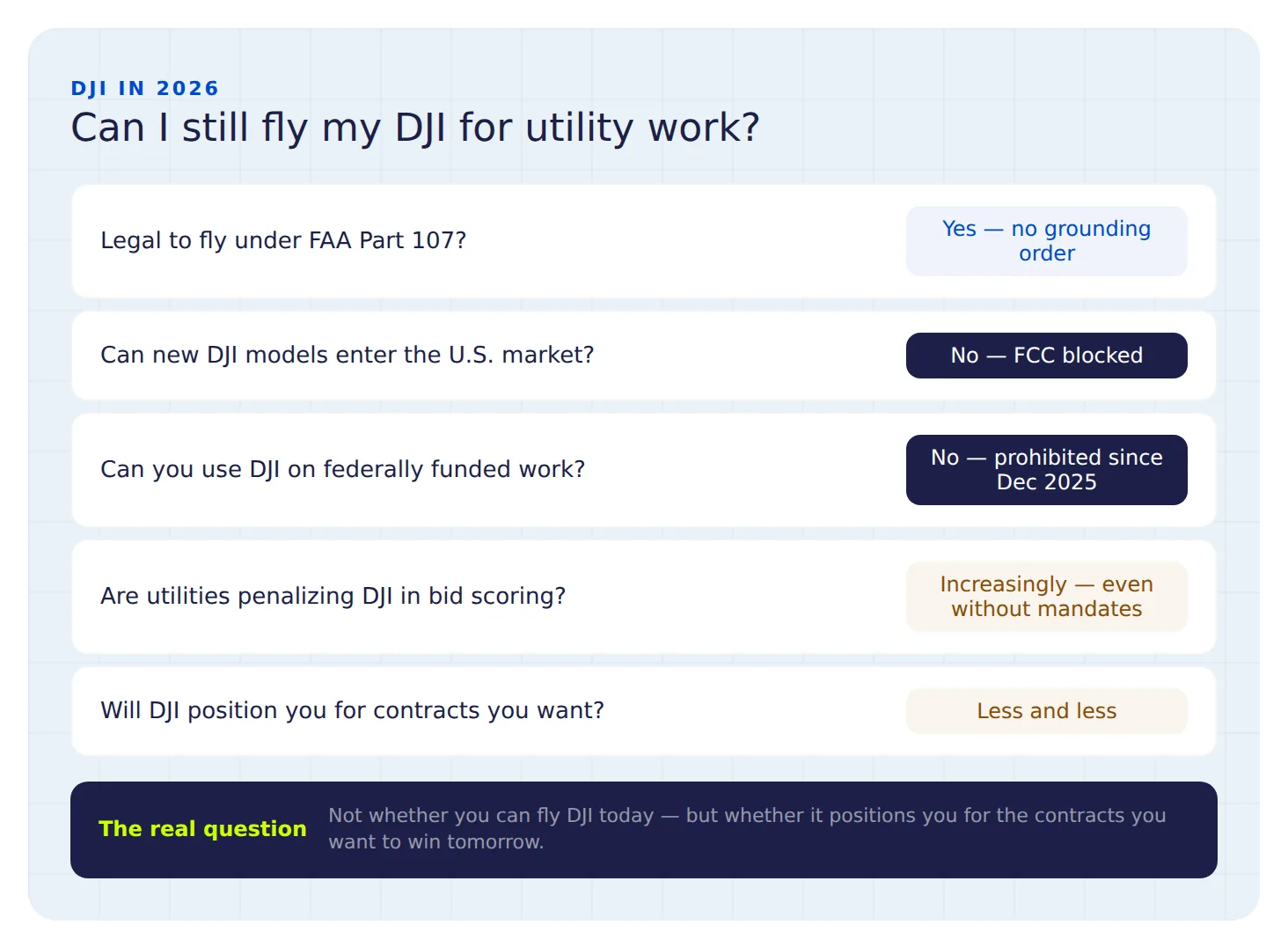
Your existing DJI drones are still legal to fly. There's been no grounding order, no remote disablement, no FAA restriction on previously authorized equipment. But the pipeline is sealed: new DJI models can't receive FCC authorization, so they can't legally enter the U.S. market. DJI has sued the FCC, but the outcome is uncertain and the timeline is long.
For DSPs serving utilities, the real question isn't whether you can fly your DJI fleet today. It's whether that fleet positions you for the contracts you want to win tomorrow. Increasingly, it doesn't.
Three things utilities are telling us right now
We process inspection data from dozens of utility programs. Here's what we're hearing from the people who evaluate DSP vendors:
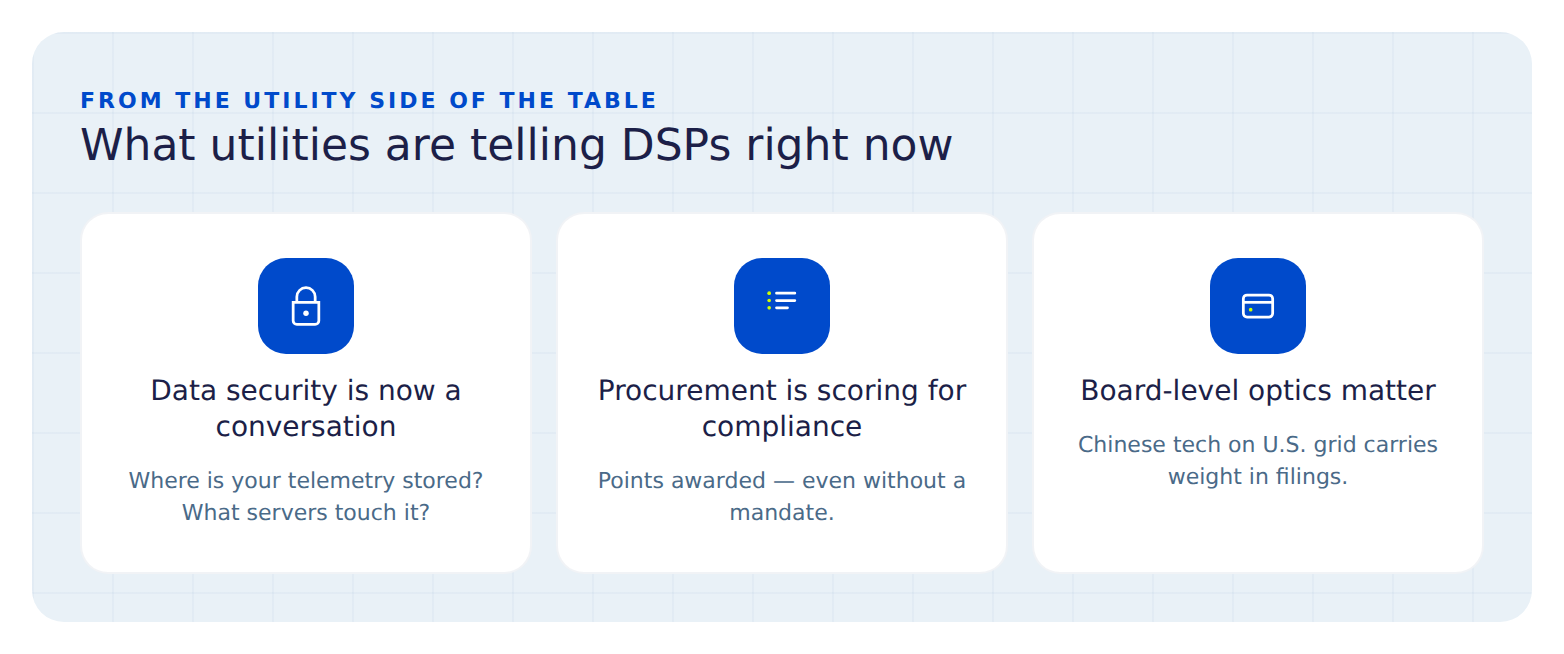
1. Data security has become an actual conversation. Two years ago, nobody on the utility side asked a DSP where their flight telemetry was stored. Now it comes up in vendor reviews. Risk teams want to know exactly what servers touch the data between capture and delivery. If you're flying DJI, expect to be asked about this - and expect to need a good answer.
2. Procurement teams are scoring for compliance. Even utilities that haven't formally mandated NDAA compliance are writing language into new contracts that awards points for compliant equipment. Non-compliant operators lose points in bid scoring without being outright banned - yet.
3. Board-level optics matter. Utilities are critical infrastructure operators. The optics of using Chinese-manufactured technology to inspect the nation's power grid carry weight in boardrooms and regulatory filings, independent of the technical security debate.
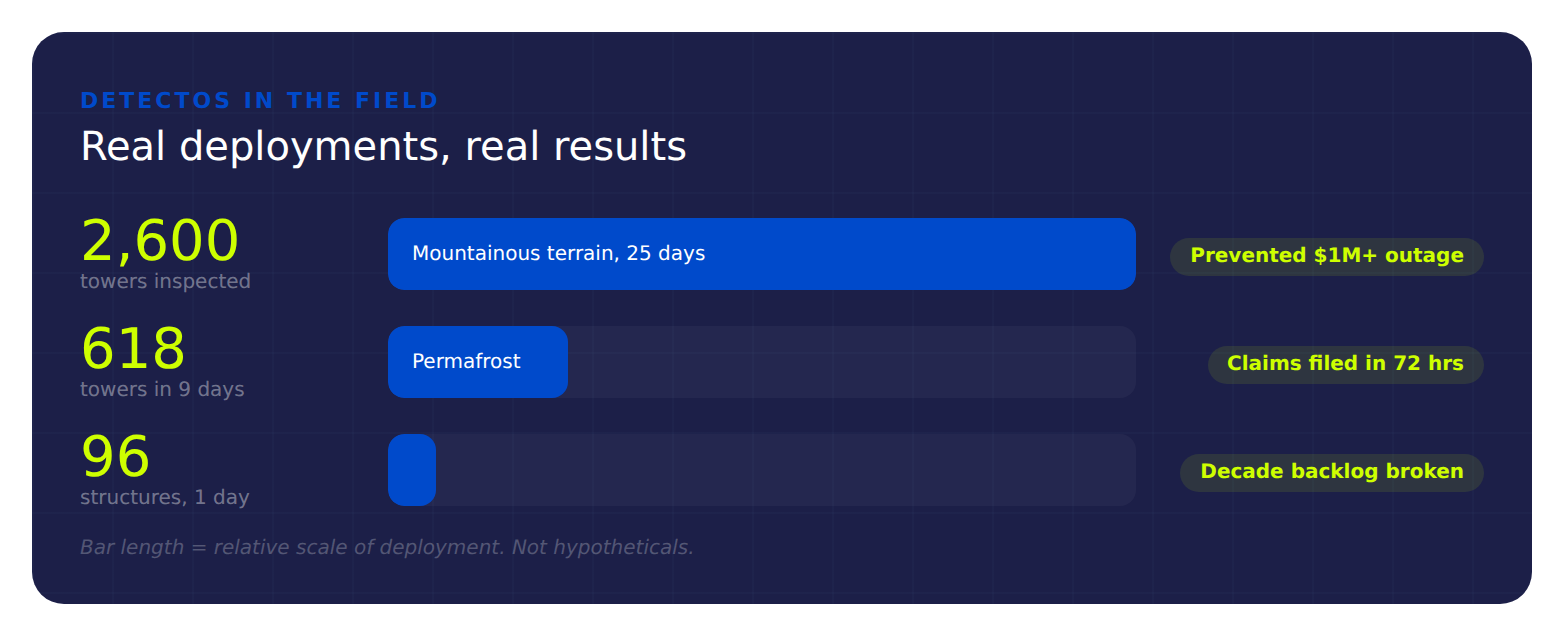
What Compliant Operations Look Like in Practice
On a newly built 250-mile HVDC intertie, DetectOS reviewed imagery of about 2,600 towers and flagged a clevis bolt with its cotter key missing - before it could trigger a week-long forced outage.
In another, a utility needed to audit 618 towers in permafrost terrain before a warranty window closed - drone-captured data delivered actionable results in 9 days. And when 96 aging wooden H-frame structures showed signs of critical decay, a one-day UAV inspection produced the evidence that unlocked a multi-million-dollar rebuild approval in 10 minutes.
These are examples of what happens when compliant capture meets AI-powered analysis built for utility-grade decision-making.
NDAA Compliant Drone Costs: The Real Price of Transition - and of Waiting
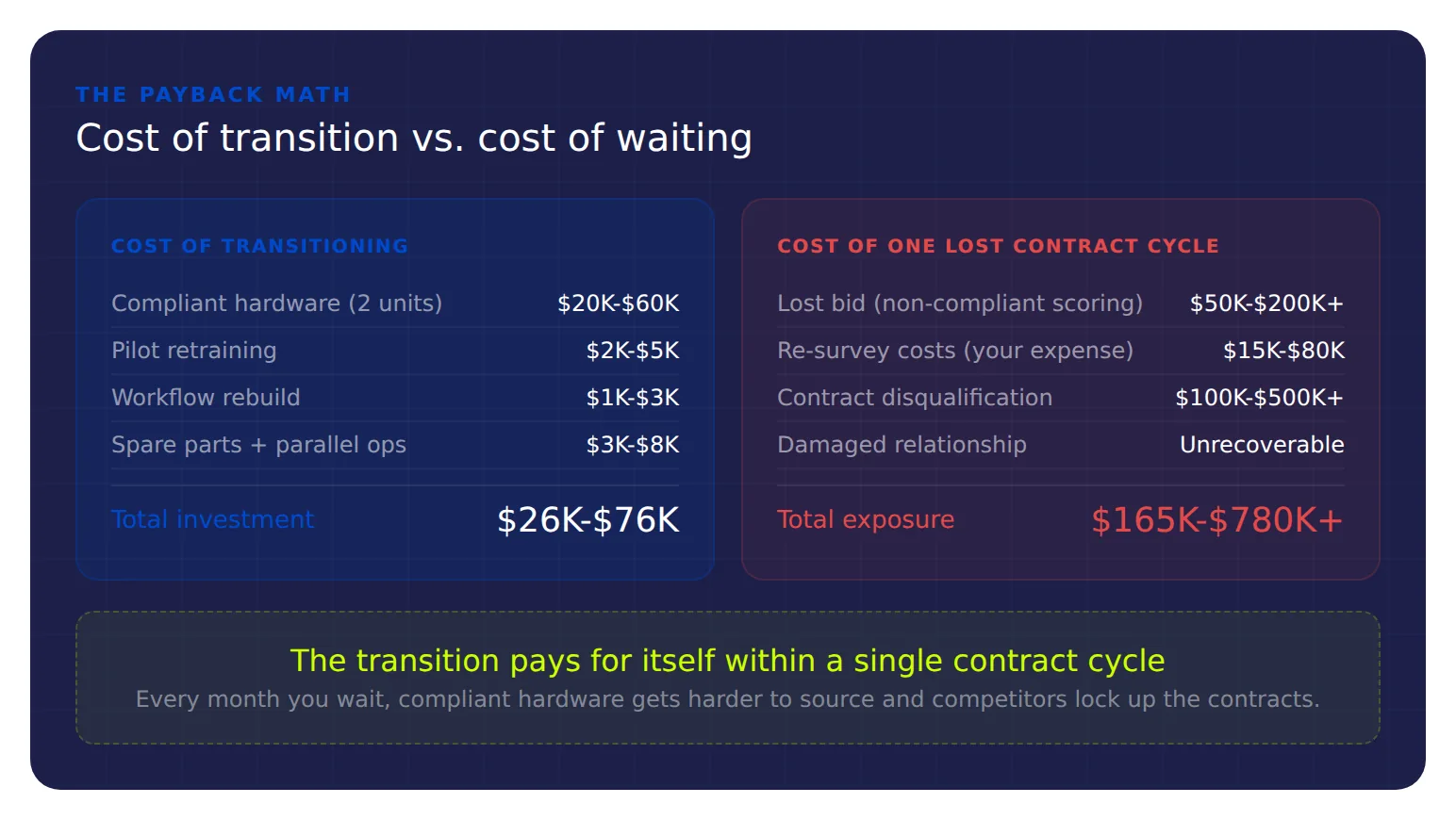
Fleet transition is expensive. No way around it. NDAA-compliant platforms like the Skydio X10, Freefly Astro, Inspired Flight IF800, and ACSL SOTEN carry meaningful price premiums.
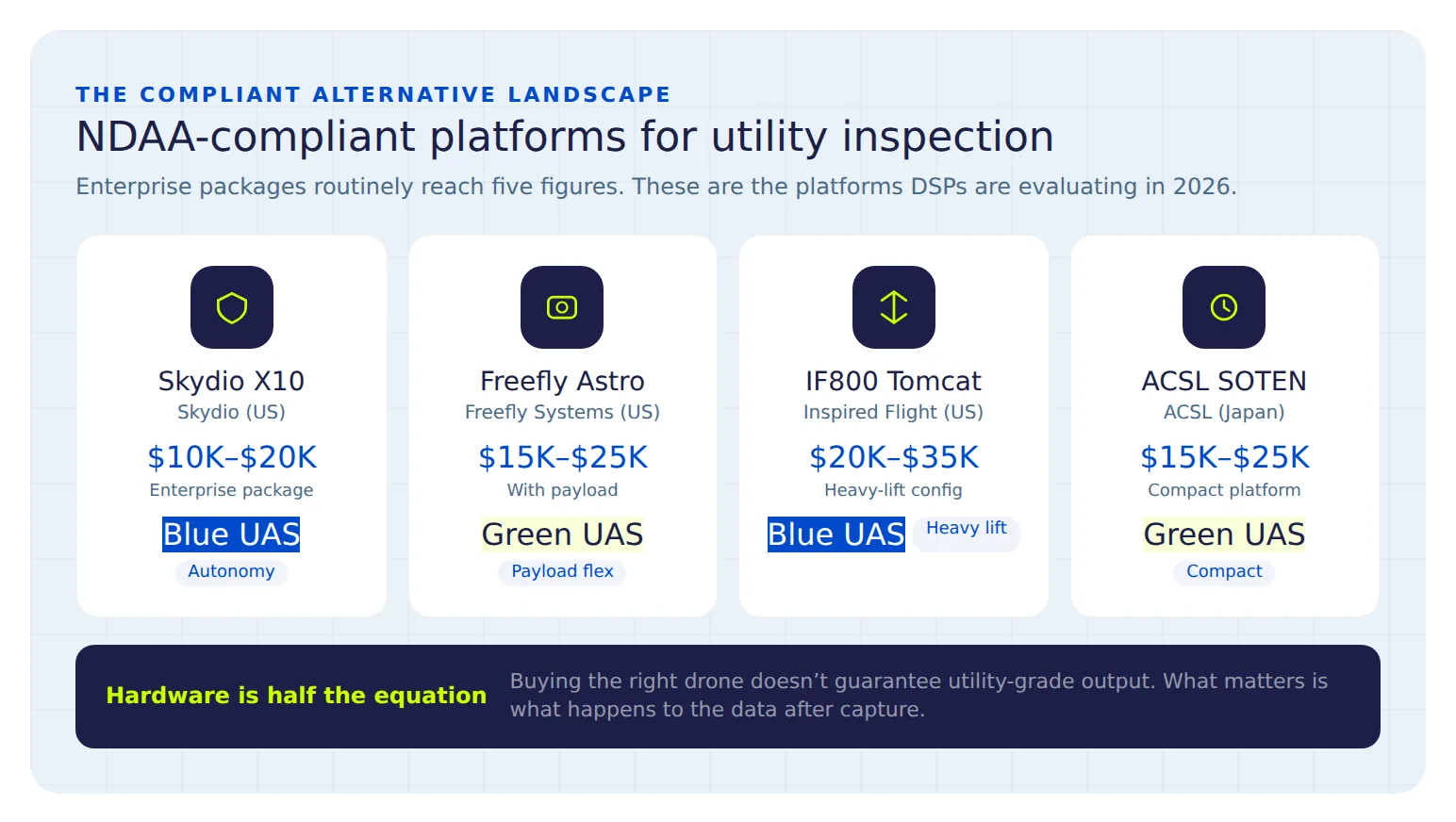
Enterprise packages routinely reach five figures per unit, and total transition costs - retraining, workflow rebuilding, spare parts - add 10–20% on top.
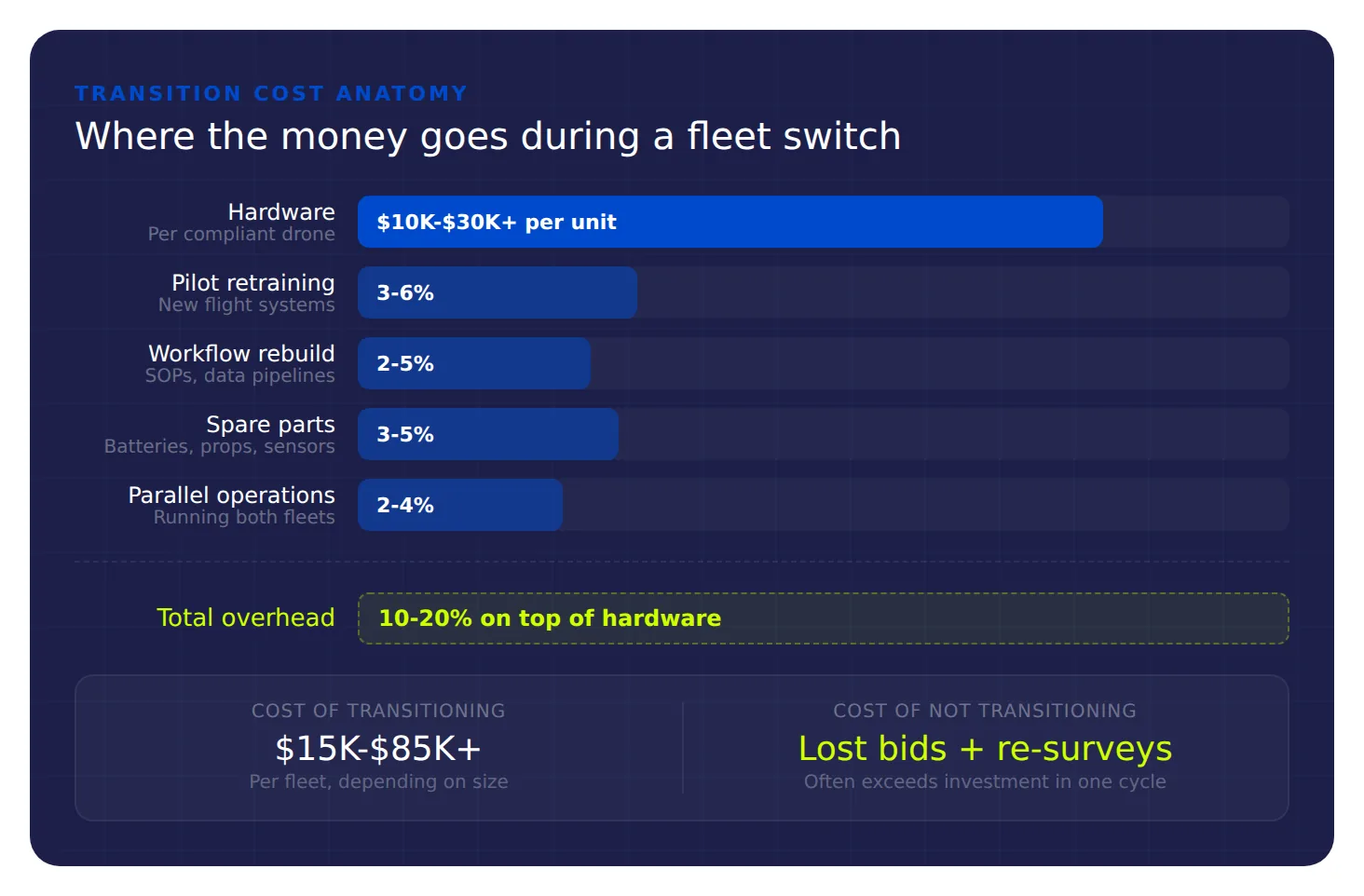
But here's what we see from the utility side that most DSPs don't factor into their math:
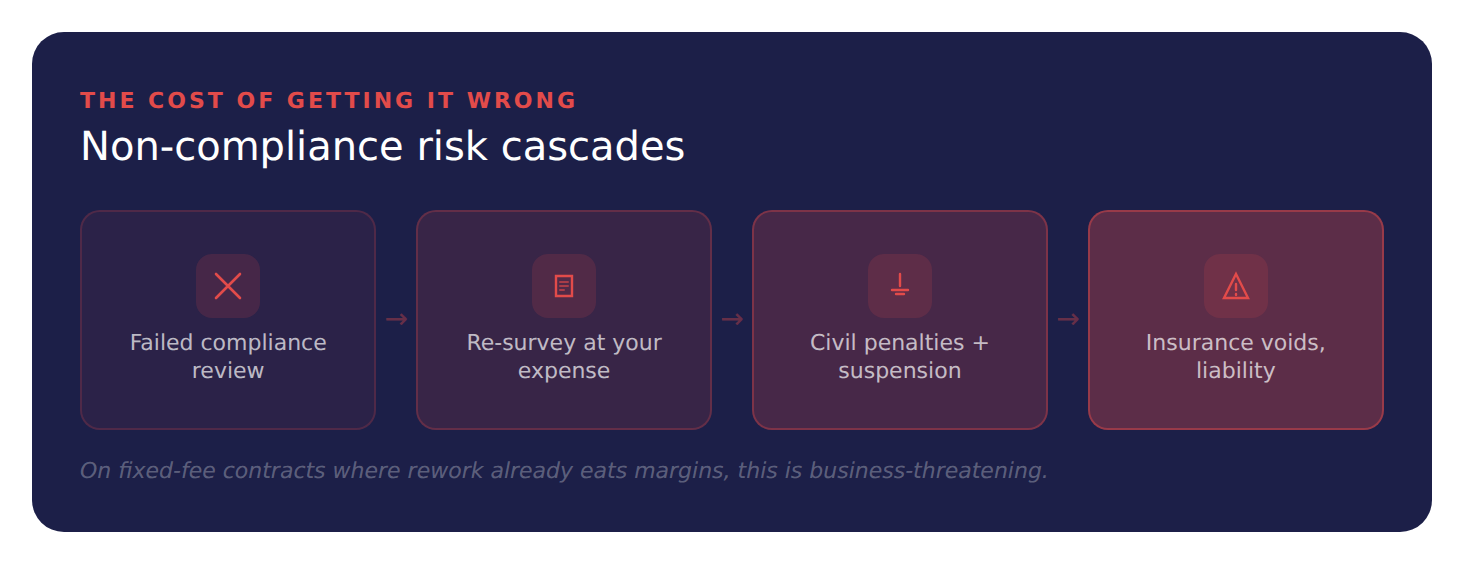
⚠️ The Cost of Getting Compliance Wrong
Projects completed with non-approved platforms may require complete re-surveys at your expense.
Federal agencies can pursue civil penalties and suspend contractors from future work.
Insurance coverage becomes questionable when non-compliance voids contract terms - creating liability your policy may explicitly exclude.
For DSPs on fixed-fee utility contracts where rework already eats margins, regulatory non-compliance risk is a business-threatening addition to the equation.
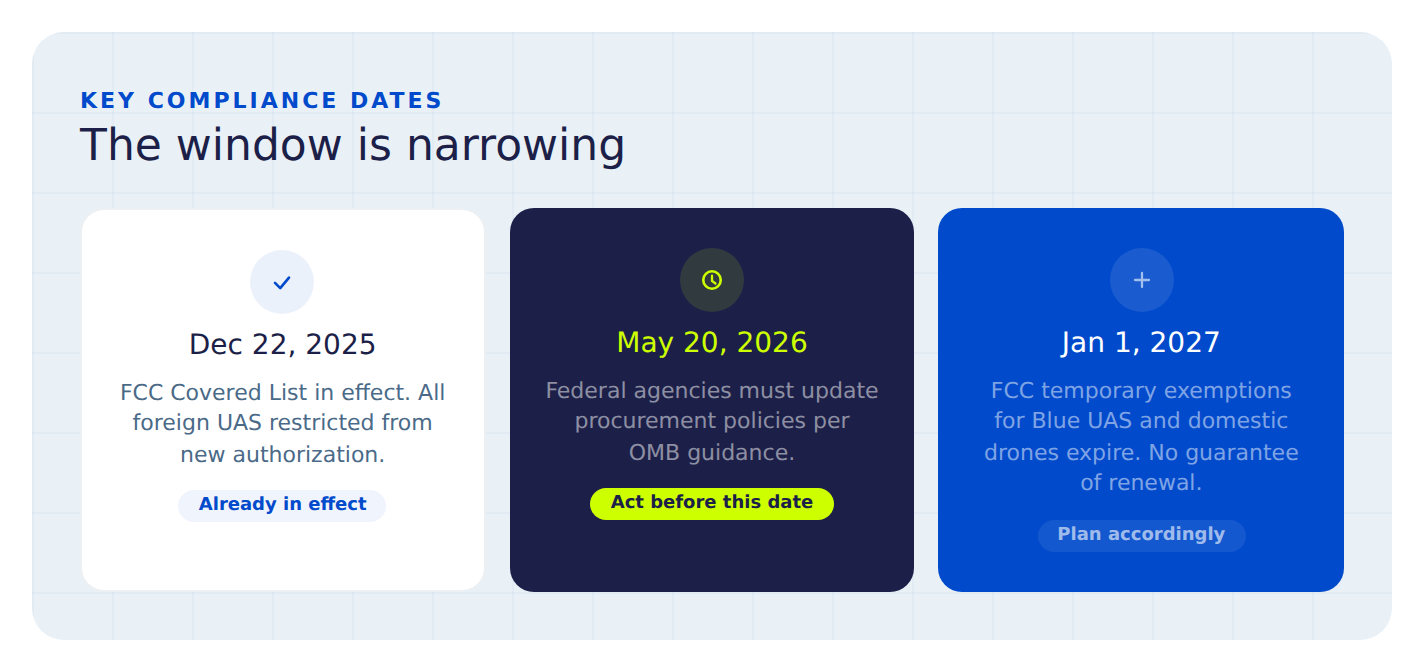
The window is narrowing
- January 1, 2027: FCC temporary exemptions for Blue UAS and domestic drones expire.
- May 20, 2026 (passed): Federal agencies were required to update procurement policies per OMB guidance.
- Now: Domestic battery and component supply chains are years from volume production. Cost premiums and limited inventory are today's reality.
Every month you wait, compliant hardware gets harder to source, training timelines compress, and competitors who moved earlier lock up the contracts you're still planning to bid on.
What Top-Performing DSPs Are Doing Right Now
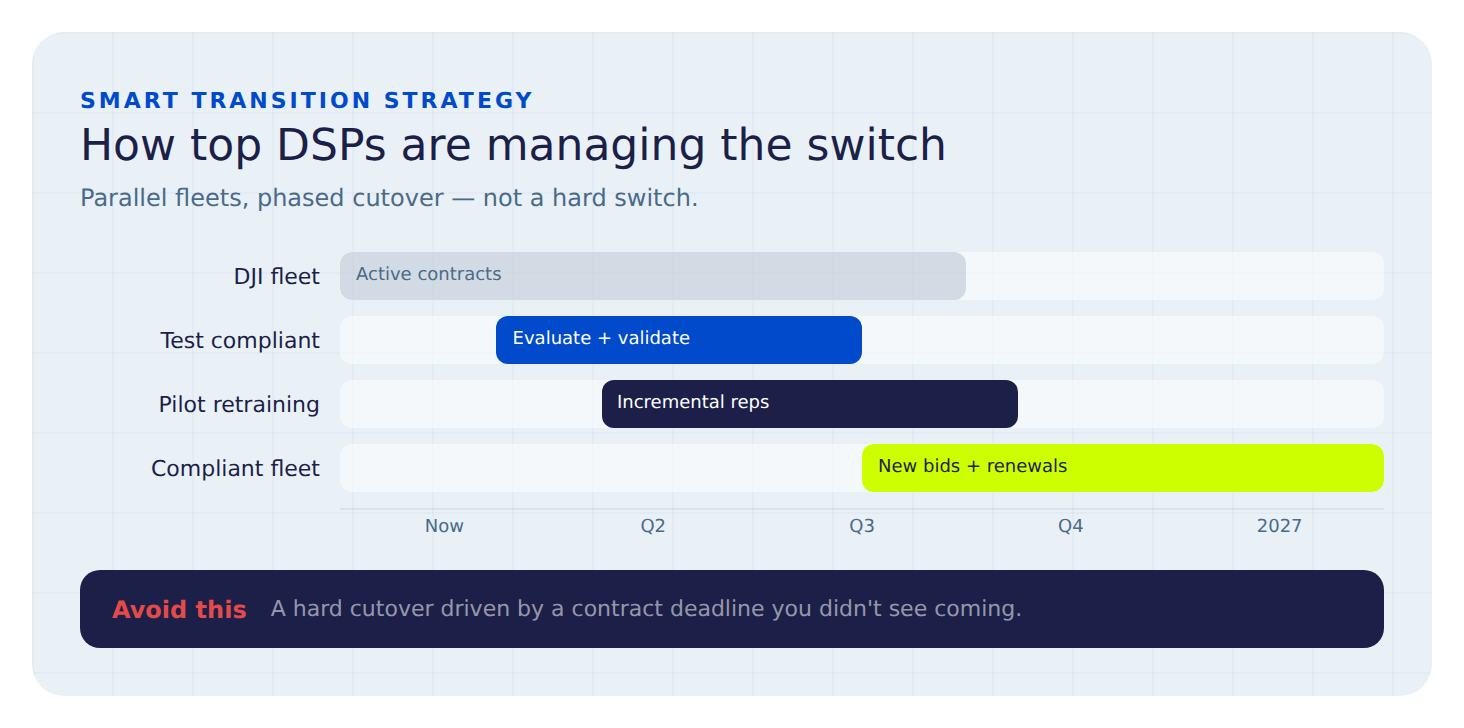
The operators winning utility contracts in 2026 aren't waiting for the regulatory picture to "settle." They're running parallel fleets - maintaining DJI for active contracts while testing compliant platforms against their specific workflows. They're budgeting transition as a line item, not an emergency. And they're choosing platform-agnostic software so their compliance investment doesn't chain them to a single hardware vendor.
Drone Data Security and Quality After You Buy
This is the part of the compliance conversation that almost nobody is having.
Every guide you'll find focuses on hardware. Which drone to buy. Which list it's on. Which components are in it. That stuff matters. But it's maybe half the picture.
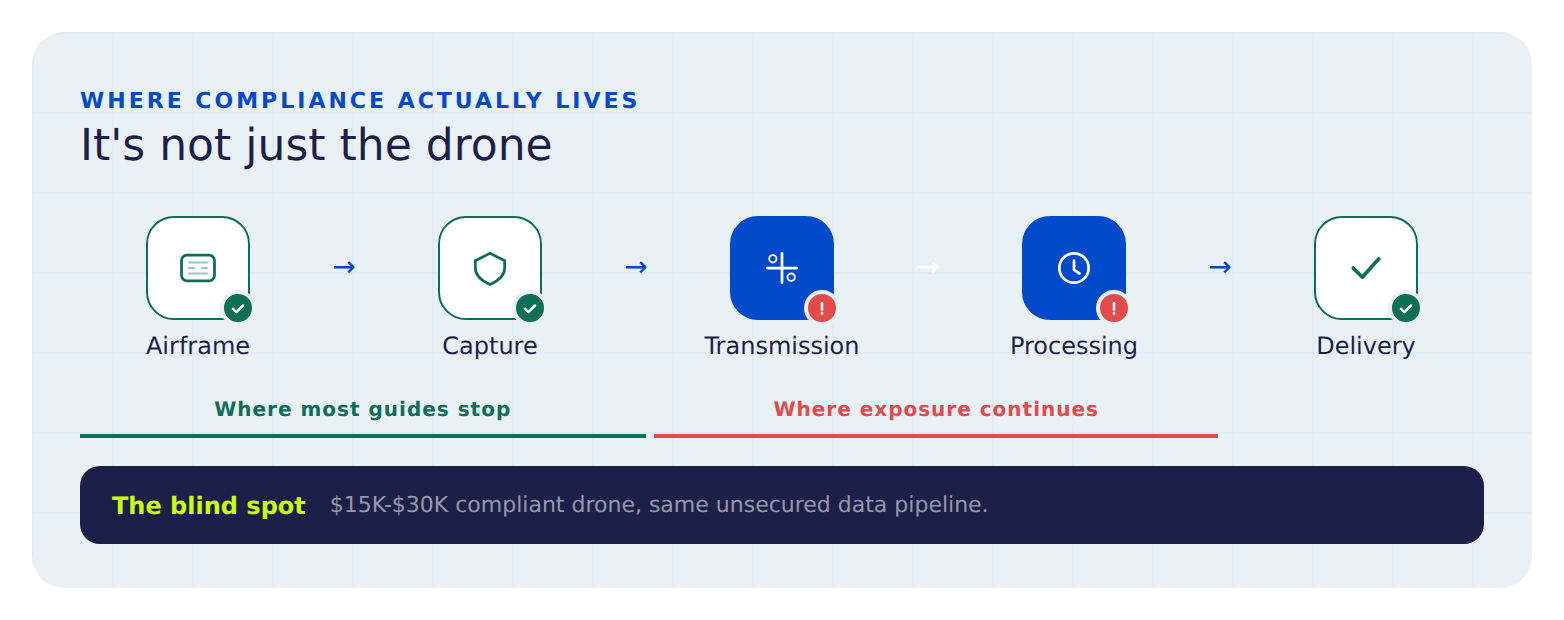
The other half - the half that determines whether your compliance investment actually pays off - is what happens to the data after you capture it.
Compliance doesn't end at the airframe
Compliance reviews in 2026 focus heavily on data flow. Where is flight data stored? Who accesses telemetry? How is imagery transmitted, processed, and delivered? A drone built entirely from approved components can still create compliance exposure if the data pipeline runs through unsecured or prohibited infrastructure.
This is a blind spot we see all the time. A DSP invests $15,000–$30,000 in a compliant drone, retrains pilots, rebuilds flight plans - and then pushes imagery through the same unsecured pipeline they used before, because nobody told them that part mattered too.
The bigger problem: Does your data still meet utility standards?
We keep seeing the same thing happen:
DSP transitions to a compliant fleet. Regulatory box: checked. They show up for the next inspection campaign and the imagery comes back... not great. Wrong angles. Inconsistent resolution. Metadata gaps. The utility rejects a chunk of it.
It's not a competence problem. Switching platforms just introduces a lot of variability that people underestimate. Different cameras behave differently. Gimbals have different quirks. GPS handling varies. And as we documented in our deep dive on transmission line inspection challenges, even experienced crews interpret the same visual data differently - one team flags a hairline crack, another dismisses it. When you're also learning a new flight control system, that inconsistency gets worse before it gets better.
The utility on the receiving end doesn't know or care that you're mid-transition. They need structured, AI-ready imagery at the right angles with the right component coverage. If your fleet swap compromises that, you haven't solved a compliance problem - you've created a quality problem. And from the utility's chair, the result is the same: you're a vendor they can't count on.
This Is Why We Built the Pilot Partner Program
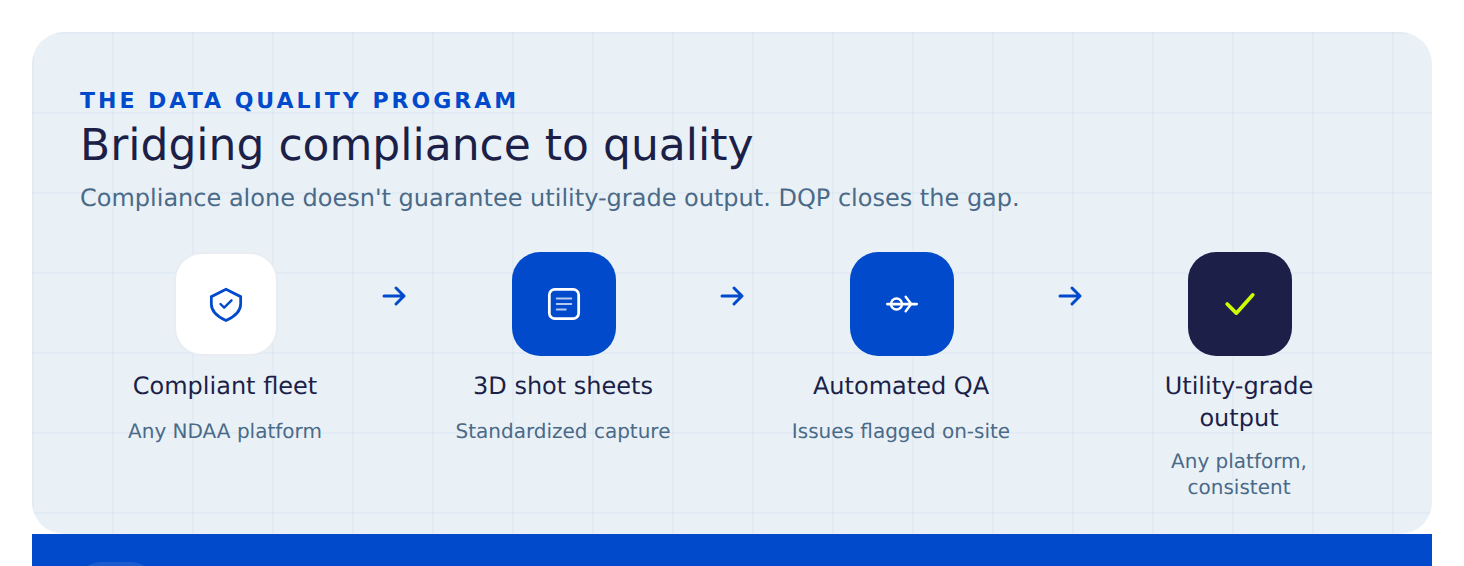
Not because compliance is simple - but because compliance alone isn't enough. The Pilot Partner Program gives DSPs standardized 3D shot sheets, automated flight planning, and integrated QA that work with any NDAA-compliant platform. Your compliance investment feeds directly into utility-grade output - regardless of what's in the air.
How to Evaluate Your Fleet for NDAA Compliance: Five Steps
Every operation is different. Rather than prescribing specific hardware, here's the framework we'd walk through with any DSP assessing their fleet today:
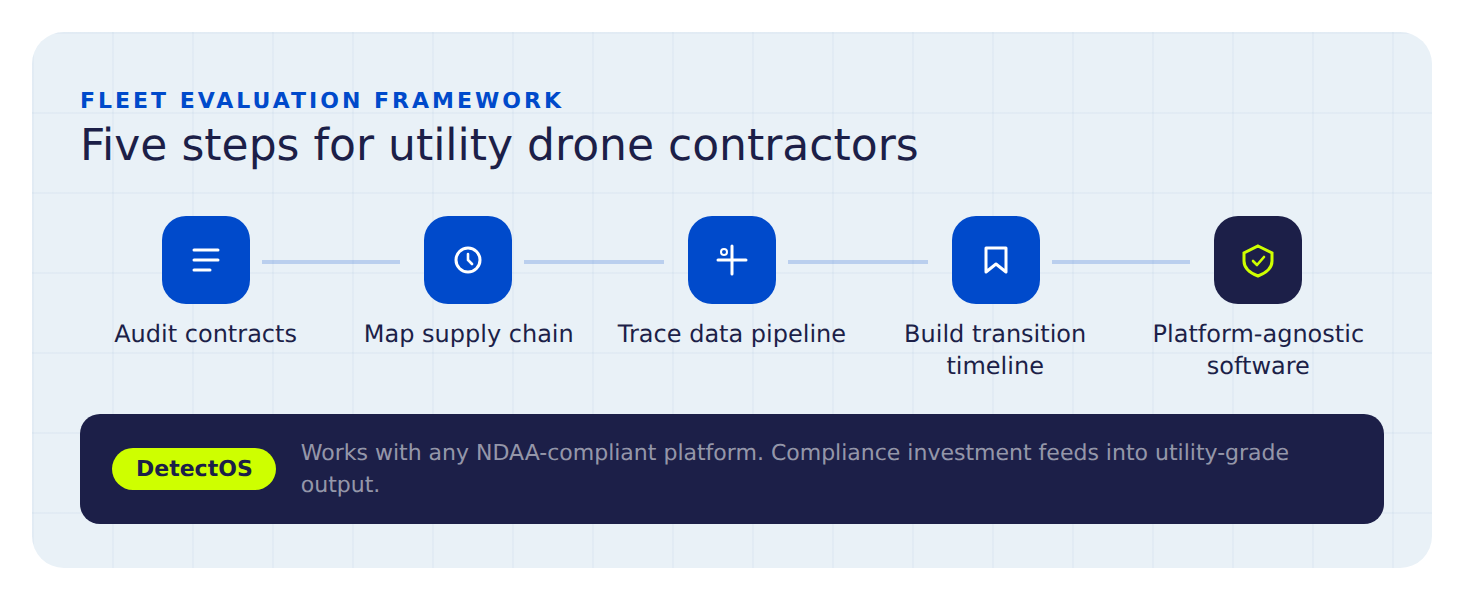
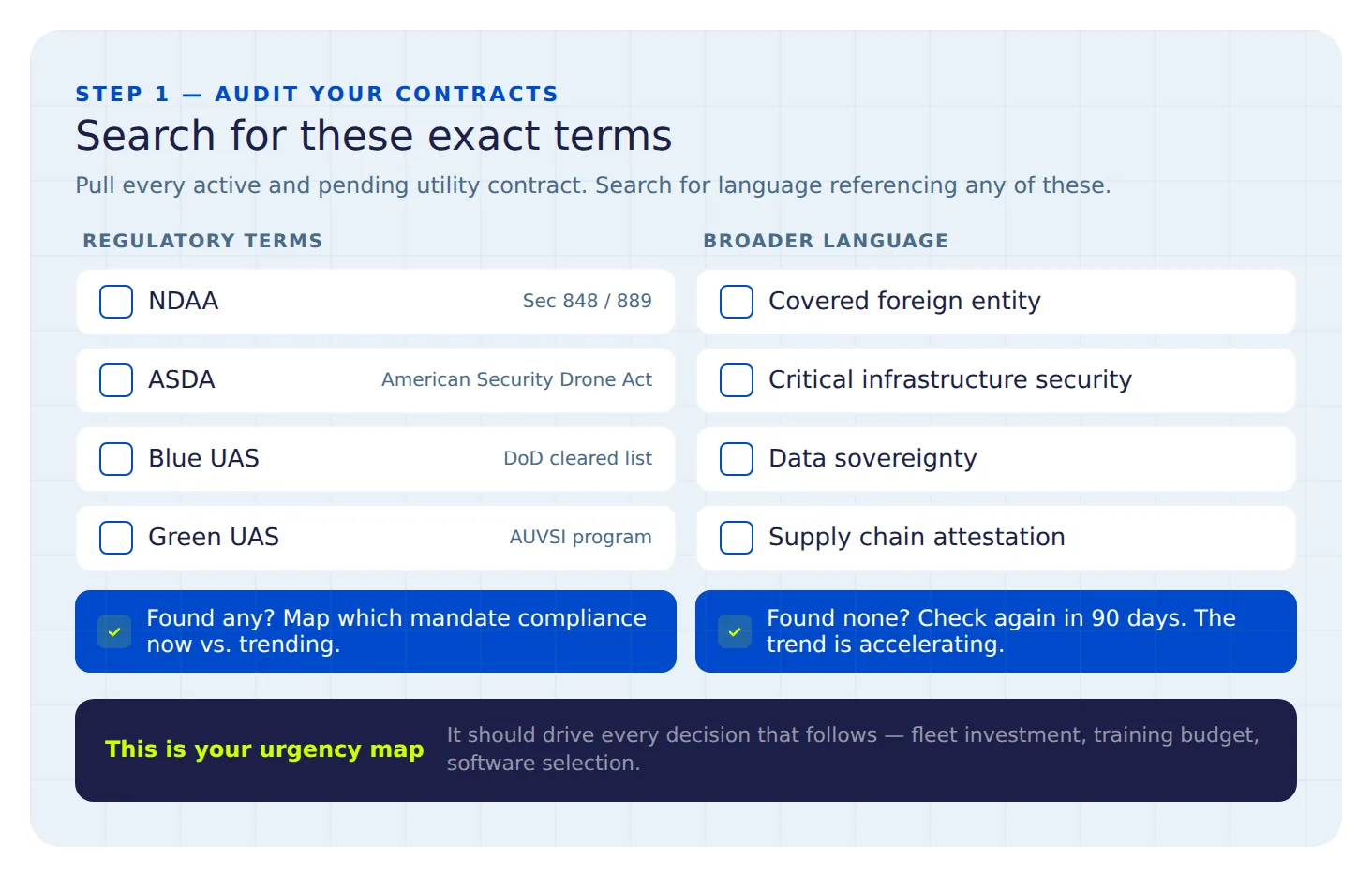
01 Audit Your Contracts
Pull every active and pending utility contract. Search for language referencing NDAA, ASDA, Blue UAS, Green UAS, "covered foreign entity," or "critical infrastructure security." Map which contracts already mandate compliance and which are trending that direction. This is your urgency map - and it should drive every decision that follows.
02 Map Your Supply Chain Exposure
Compliance isn't just the airframe. Inventory every component: payloads, sensors, radios, batteries, ground control stations, processing software. Request component sourcing declarations from your manufacturers. If a vendor can't or won't produce documentation, that's not ambiguity - it's risk.
03 Trace Your Data Pipeline
Follow your inspection data from capture to delivery. Where is it stored in transit? What cloud services touch it? Which software processes it? See how Detect manages the full data journey from capture to actionable intelligence as a reference for what a secure, utility-grade pipeline looks like.
04 Build a Transition Timeline, Not a Transition Event
The operators who do this well treat it as a phased program: test compliant platforms in parallel, validate data quality against utility standards, retrain pilots incrementally, and maintain operational continuity throughout. The worst approach? A hard cutover driven by a contract deadline you didn't see coming.
05 Choose Platform-Agnostic Software
Your hardware will change - probably more than once as the compliant market matures. If your entire workflow is locked to one platform's proprietary software, every hardware transition means rebuilding from scratch. Software that standardizes capture, automates QA, and produces consistent deliverables regardless of what's in the air protects you from hardware volatility - and turns your compliance investment into compounding operational value.
The Bigger Picture: Compliance Is a Competitive Moat
One more thing before we wrap this up.
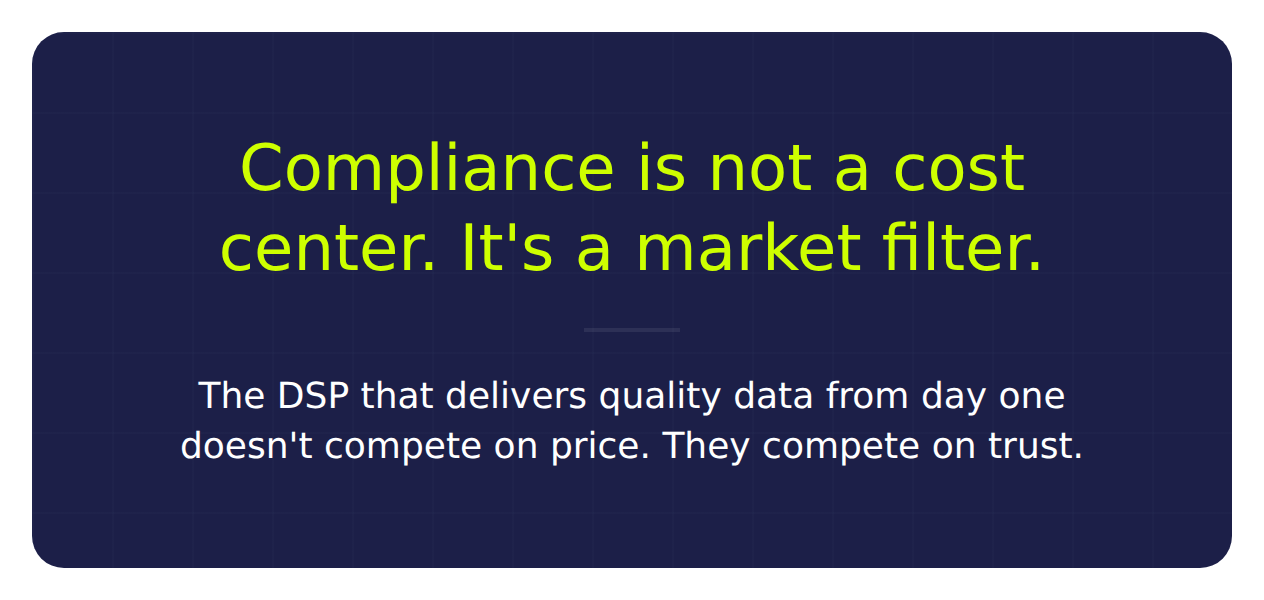
The DSPs investing now - compliant fleets, secure data pipelines, capture standards that actually hold up - aren't checking a box. They're building an advantage that gets wider with every contract cycle, because the operators who didn't invest are getting squeezed out.
The DSP that delivers quality data from day one doesn't compete on price. They compete on trust. That's the game worth winning.
Frequently Asked Questions: NDAA Drone Compliance for Utility Contractors
What does NDAA compliant mean for drones?
Short version: it means your drone and all its key components aren't sourced from China, Russia, Iran, or North Korea. The legal basis is Section 848 of the FY2020 NDAA, expanded government-wide by the American Security Drone Act, enacted with the FY2024 NDAA. It covers the whole system - flight controllers, radios, cameras, gimbals, ground control software, data storage. Not just the airframe. And here's the kicker: there's no official stamp. Manufacturers self-report compliance, so the verification burden lands on you.
Is DJI NDAA compliant?
No. DJI is headquartered in Shenzhen, China. That's a non-starter under current law. Since December 2025, DJI has been on the FCC's Covered List, which blocks new models from getting FCC authorization for U.S. sale. You can still fly the DJI gear you already own under Part 107 - nobody's grounding your fleet. But you can't use it on federally funded work, and more utility RFPs are penalizing it in scoring even when they don't outright ban it.
What is the difference between NDAA compliance, Blue UAS, and Green UAS?
People mix these up constantly. NDAA compliance is the law - a sourcing restriction. Blue UAS is a DoD program that adds cybersecurity testing on top of that; it's the highest bar, mostly relevant to defense procurement. Green UAS is AUVSI's commercial certification - less restrictive than Blue, more credible than self-reporting. For most utility DSPs, Green UAS hits the sweet spot. But read your contract language carefully - it tells you which one actually applies.
Do utility contractors need NDAA compliant drones?
If federal money is anywhere in your contract chain - FEMA grants, FHWA highway funding, DOE programs, anything - then yes, it's mandatory since December 22, 2025. But even on fully private utility contracts, we're watching the same pattern repeat: utilities are writing compliance preferences into new RFPs, their risk teams are advising it, and vendors who can't document compliance are losing points in bid scoring. For utility DSPs, treating this as a baseline requirement is the safe bet.
Does NDAA compliance apply to drone data and software, not just hardware?
Yes - and this is the one people miss. In 2026, compliance reviews aren't just about what's in the air. They're looking at where your data goes after you capture it. What cloud services touch it. Where firmware updates come from. You can fly a perfectly compliant drone and still blow your compliance posture if the data pipeline runs through prohibited infrastructure. Map your entire data chain from capture through delivery - not just the hardware.
What happens if I use a non-compliant drone on federal work?
It's bad. You could be forced to re-survey the entire project at your own cost. Federal agencies can hit you with civil penalties and suspend you from future work. Your insurance may not cover you if non-compliance voids your contract terms - a lot of policies explicitly exclude that. On a fixed-fee utility contract where rework is already eating your margins, this is the kind of risk that can sink a business.
How do I verify if a drone is NDAA compliant?
There's no official compliance certificate - it's on you to do the diligence. Ask the manufacturer for component sourcing declarations, supply chain documentation, and corporate ownership details. Check the Blue UAS Cleared List and Green UAS list. If a manufacturer gets squirrely when you ask for documentation, that tells you what you need to know. The companies that actually are compliant lead with this information because it's how they justify their pricing.
What is the cost to transition from DJI to NDAA compliant drones?
NDAA compliant alternatives carry meaningful price premiums over equivalent DJI platforms. Enterprise drone packages routinely reach five figures per unit. Total transition costs - including pilot retraining, workflow rebuilding, and spare parts stocking - typically add 10–20% on top of hardware costs. However, the cost of not transitioning - lost bids, re-survey liability, contract disqualification - often exceeds the investment within a single contract cycle.
Can I still fly my DJI drone for utility inspection in 2026?
Legally, existing DJI drones remain flyable under FAA Part 107. However, for utility inspection work specifically, the operational question is whether DJI equipment positions you for the contracts you want to win. Utilities are increasingly scoring for NDAA compliance in vendor evaluations, and any contract involving federal funding now prohibits the use of covered UAS.
How do I maintain data quality during a drone fleet transition?
This is the question nobody else in the compliance conversation is answering - and it's the one that bites hardest. New platforms mean new camera behavior, new gimbal quirks, new GPS handling. Your pilots need reps to get comfortable. In the meantime, your output is inconsistent. The fix is software that doesn't care what's in the air - it standardizes your capture, runs QA automatically, and keeps your deliverables consistent through the hardware transition. That's what protects you from trading a compliance problem for a quality problem.
About Detect
Detect builds DetectOS - the operating system for utility asset inspection. Our AI-powered platform turns drone imagery into predictive intelligence, from transmission towers to distribution poles, preventing failures before they cascade across your network. The Pilot Partner Program extends this capability to the field, giving drone service providers the tools to deliver utility-grade data from any NDAA-compliant platform.
