Our Approach

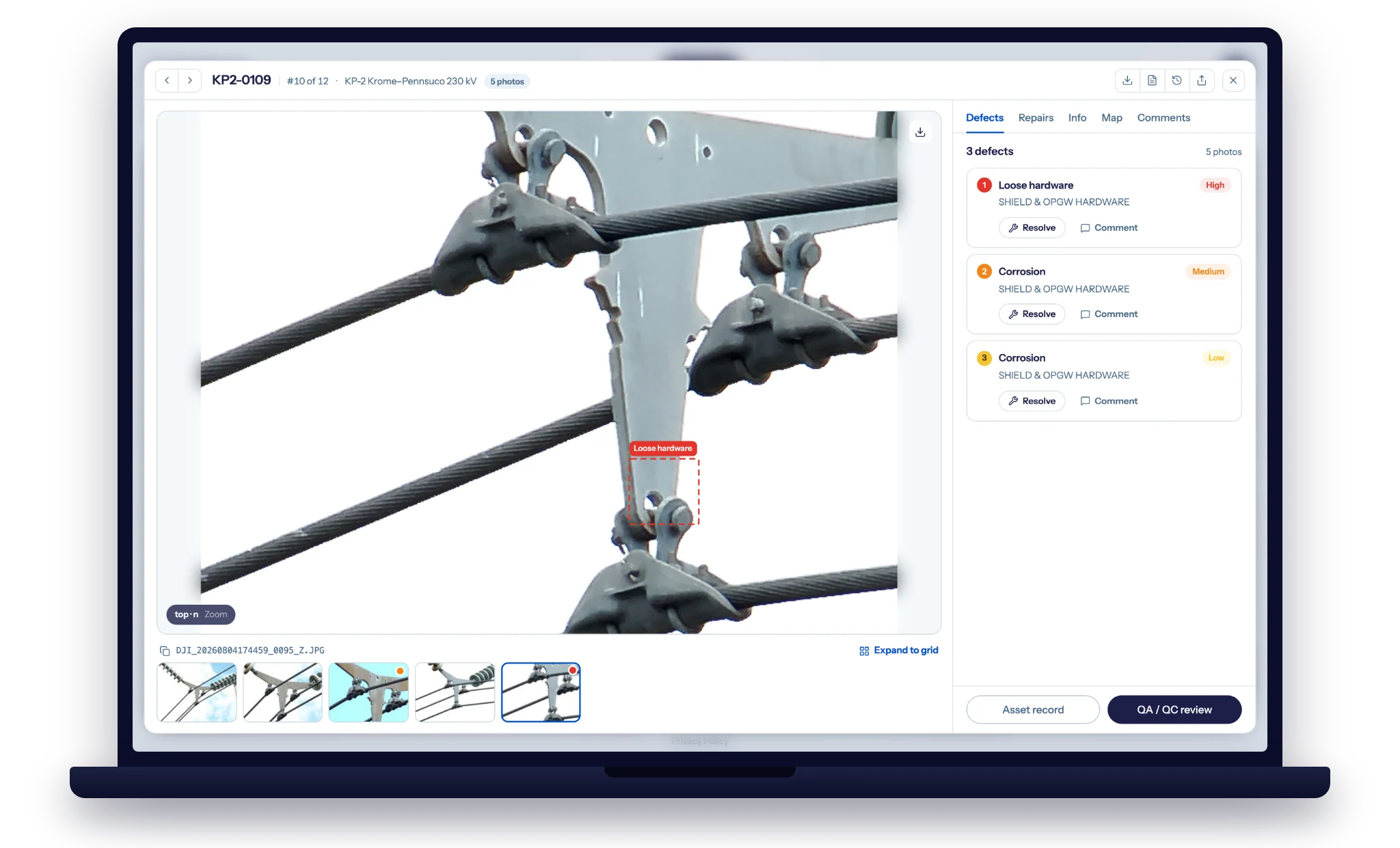
How utility asset inspection works in DetectOS

Defect detection is only as good as the data behind it.

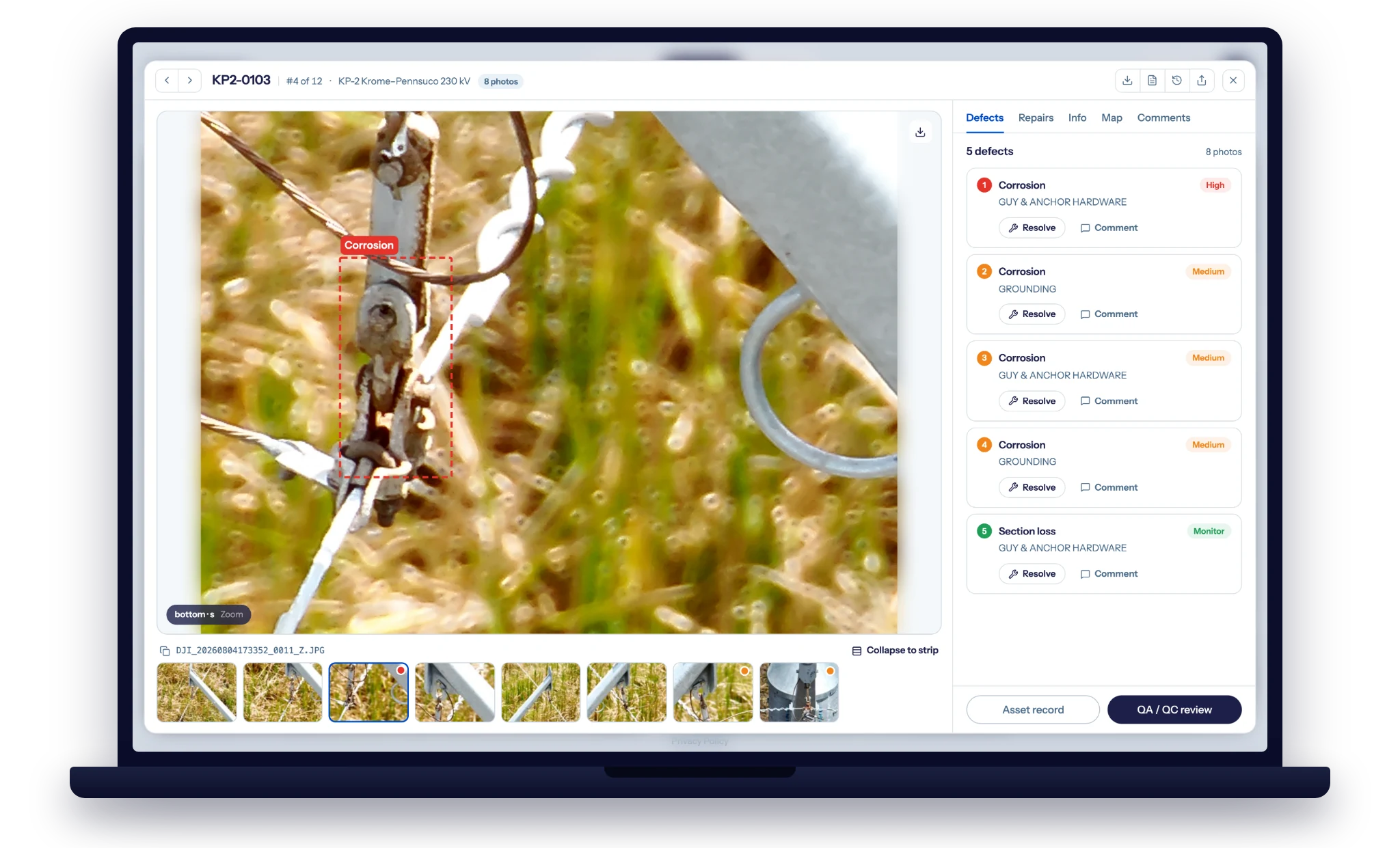
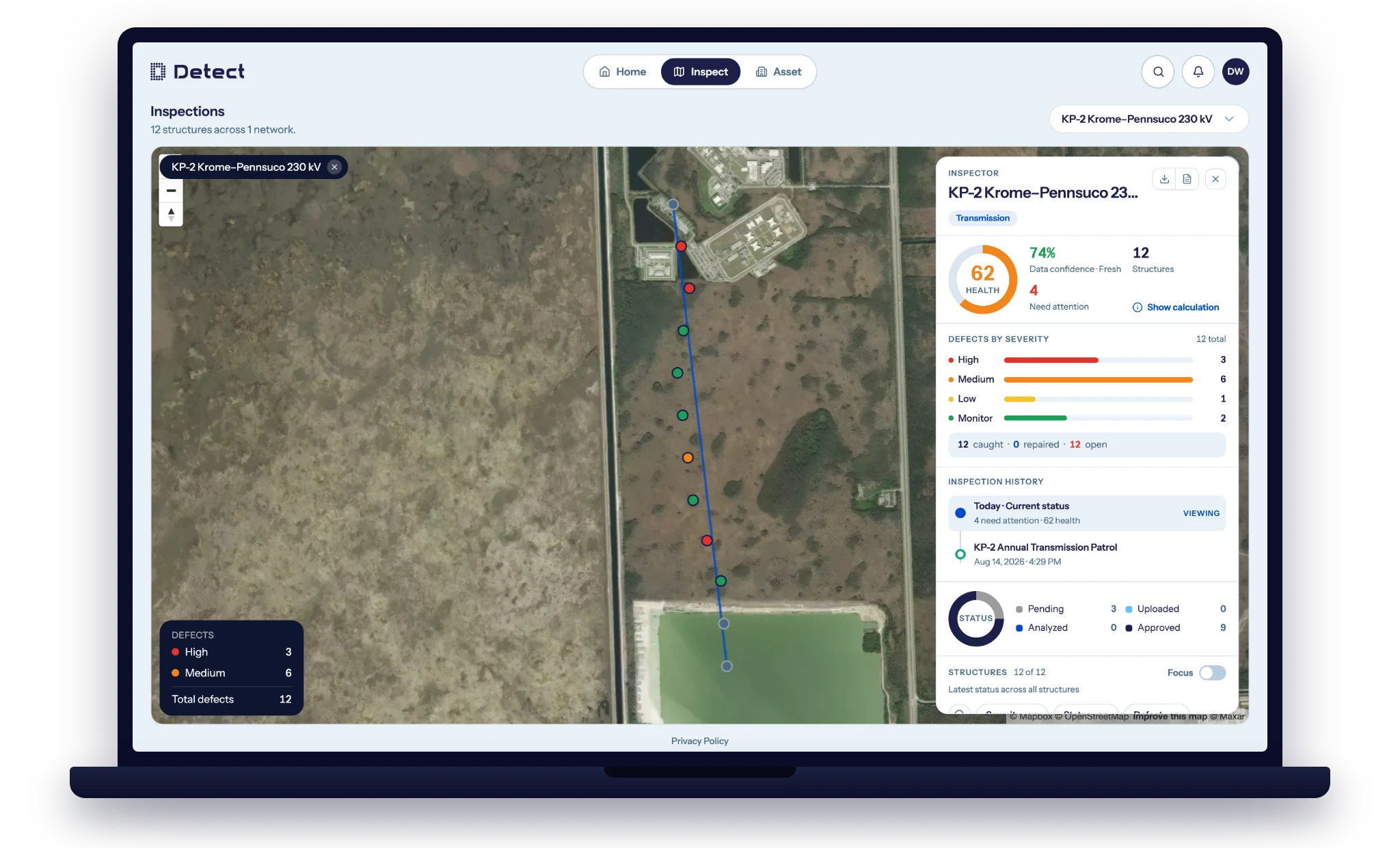
Foundation first, intelligence second. Most platforms start at the finish line - we start at the foundation. Before our AI looks for flaws, it validates three critical pillars: structural context, perspective alignment, and image integrity. Getting the fundamentals right is what makes every insight downstream accurate, actionable, and automated.
Learn more about our approach

What sets our approach apart

We always include three automated checks before analysis begins:

Photo association

Machine learning algorithms accurately map images to structure IDs, even when GPS coordinates are incorrect or structures are closely spaced.

Orientation tracking

Automated identification of component position and viewing angle across multi-phase towers and complex structures.

Quality assurance

Real-time flagging of blurry, pixelated, or incomplete images while crews are still on-site.
Only after these checks pass does the platform move to defect detection. This sequencing delivers trusted results at prices utilities can afford.
Talk with our team

The Circular
Maintenance Cycle

Linear maintenance stops at the inspection report. Circular maintenance uses each inspection to improve the next one.

DetectOS closes the loop from planning through action. Each cycle generates data that improves future inspections. This moves you from reactive maintenance to predictive intelligence.

Plan

Per-asset shot sheets define a complete capture, so every cycle shoots the same way

Action

Export risk-ranked findings as CSV with the columns your work-order system needs

Execute

Repeatable paths deliver consistent imagery across operators and equipment

Visualize

Results auto-organize by asset and severity in DetectOS

Analyze

AI does the first pass; inspection experts verify every finding

Plan

Per-asset shot sheets define a complete capture, so every cycle shoots the same way

Execute

Repeatable paths deliver consistent imagery across operators and equipment

Analyze

AI does the first pass; inspection experts verify every finding

Visualize

Results auto-organize by asset and severity in DetectOS

Action

Export risk-ranked findings as CSV with the columns your work-order system needs

Learn more about our platform DetectOS
Your systems stay. Our intelligence plugs in.
DetectOS connects directly to the platforms your teams already use. 

Inspection findings flow into ArcGIS, work order management systems, and enterprise asset databases without manual exports or duplicate data entry.

All the prioritized repairs your crews see are in the tools they open every day, not a separate system they need to learn.

Results when stakes are high

DetectOS was made to see and stop failures before they happen.

$1M outage prevented

Caught an under-torqued bolt before it caused a week-long outage on
230kV transmission line.

Read more customer stories

Solutions built for your entire network

Each part of your grid requires different inspection capabilities. DetectOS adapts to each one.

Transmission inspection

Cover entire corridors in weeks, not seasons

Captures complete corridor documentation with hardware-level detail while conditions are still current.

Learn more

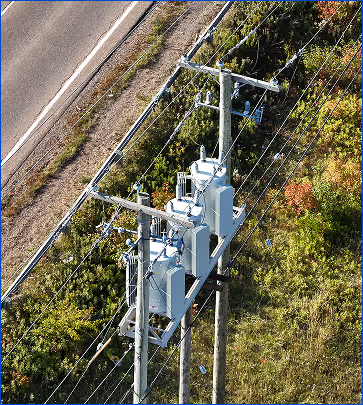
Distribution Inspection

Cut inspection costs while increasing coverage

Fix the data foundation that makes
distribution inspection expensive.

Learn more

Substation monitoring

Continuous intelligence without continuous site visits

Close the gap between inspection and asset degradation with flexible capture and rapid analysis.

Learn more

See the difference in your own assets

We'll run a free audit on a representative section of your system to demonstrate what autonomous intelligence can catch before it becomes a failure.

Book Your Analysis

Frequently asked questions

How does DetectOS handle mixed data sources?

Whether you capture with drones, helicopters, trucks, or handheld cameras, DetectOS normalizes and organizes imagery automatically. Different contractors, different equipment, different dates - all unified into one coherent asset view.

Can we start with a single line or circuit?

Yes - most utilities start exactly that way. We run a free analysis on a line segment you pick, your team sees ranked and verified findings on real structures, and the program scales from there.

How does circular maintenance differ from our current process?

A linear process ends at the report. Circular maintenance feeds every inspection back into the next: capture standards sharpen, the asset record deepens, and priorities get smarter. You can filter and prioritize across hundreds of structures and track trends across your entire fleet.